
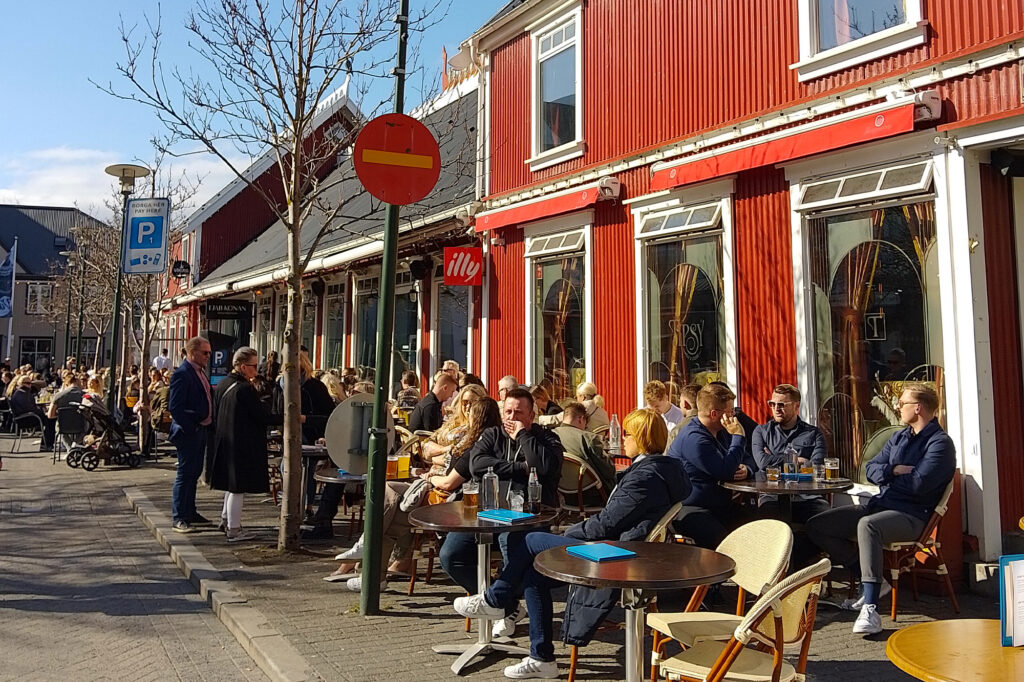
Relax… Breath…
We no longer raid monasteries, trade slaves and burn villages, but our trades bear the unmistakable mark of our Viking nature: Unyielding, open-minded, highly adaptable, egalitarian, creative, unpretentious curious travelers.
Modern Vikings – Norse people – live in a different world from our ancestors, now modern politics and grand nations surround us, modern technology has changed our lives, and our significance might not be as obvious as it used to be.
Never again will we venture into geographically unknown territory, axes raised in preparedness.
In the modern world we are tiny countries, yet home to the world’s largest shipping company, the world’s most creative toys, superior design, brilliant scientists, and – not to forget – the most advanced societies the world has ever seen.
Axes and shields aside we still navigate the world with unyielding curiosity.
We will take any idea with open arms, and adapt it to our own unique cultural framework.
In the medieval Norse “Ting” (Assembly) everyone would be heard before decisions were made, and in the modern Nordic company “contributing” is not doing what the team leader dictates, but to suggest a better solution.
A Chinese factory worker wouldn’t last five minutes in a Danish company, and a Dane wouldn’t last two minutes in a Chinese factory.
Today the Forn Siðr (old Norse) mythology and the Christian mythology coexist side-by-side, in the way we think, celebrate and decorate.
Harald Bluetooth lives on in our technology, and his runestone is printed in Danish passports.

Even those among us who are completely indifferent to history will recognise and experience familiarity when we see runes, Mjölnír, Oðin and Bifrost.
“Viking” literally means “from the bay”, and we have a special relationship to the sea.
We don’t see the ocean as a barrier but as a gateway.
We could survive in the Swiss Alps, but never thrive.
Seeing how our ancestors based their societies on mutual respect, and imported ideas, fabrics, tools, spices, concepts and traditions – indiscriminate of origin but discriminating on quality – has created a mindset and a foundation for the modern day Norse culture.
Being a modern Viking is not a nostalgic clinging to the late Iron Age, but a contemporary lifestyle based on values tested by time.
We are being criticised for debating everything, being highly opinionated, and silencing everyone who blows his own horn.
And the shoe fits!
Every achievement is the result of multiple people’s efforts, and nobody in singular can take credit: Not a king, not an Earl, not an inventor, nor a business owner.
Our laws on tax and wages reflect this. Equality is the goal, and often equity is the tool.
When a “world leader” requests that we abandon equity, if our companies want to benefit from supplying their vast army, the answer is simply “Go fuck yourself!”
Don’t mistake our courteous diplomacy, and tireless siding with the most exposed, as weakness.
We will politely shoot down most countering sentiments with a passive aggressive smile.
Challenging a thousand years of valuable experience in creating a well-functioning society requires exceptionally strong arguments.
According to two independent surveys you will get the worst service in restaurants in the Nordic countries. The waiter will not be as submissive as in many other cultures, simply because they consider themselves to be your equals, are paid quite well, and do not expect – or depend on – tips.
We have built a society where everyone, regardless of their backgrounds, can get extended education, healthcare, elder care, food on the table and a roof over their heads.
This perception of equality and equal value permeates everything in the Nordic countries.
We have built an economy that can sustain this, simply by producing things and services of real value.
Our GDP per capita reflects this quite clearly.
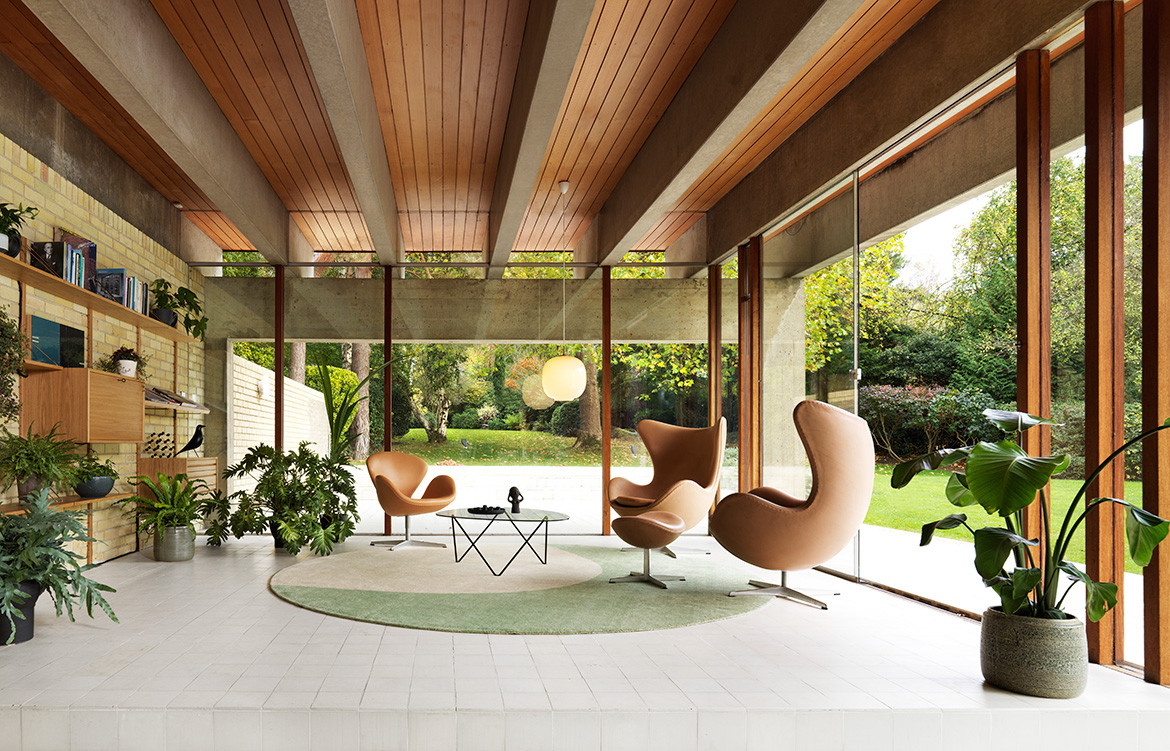
Nordic design is famous for not being ostentatious but simply very high quality, with great attention to thought out details, and superior materials.
It’s jokingly said that everything labeled “Danish Design” is 20% better and 200% more expensive.
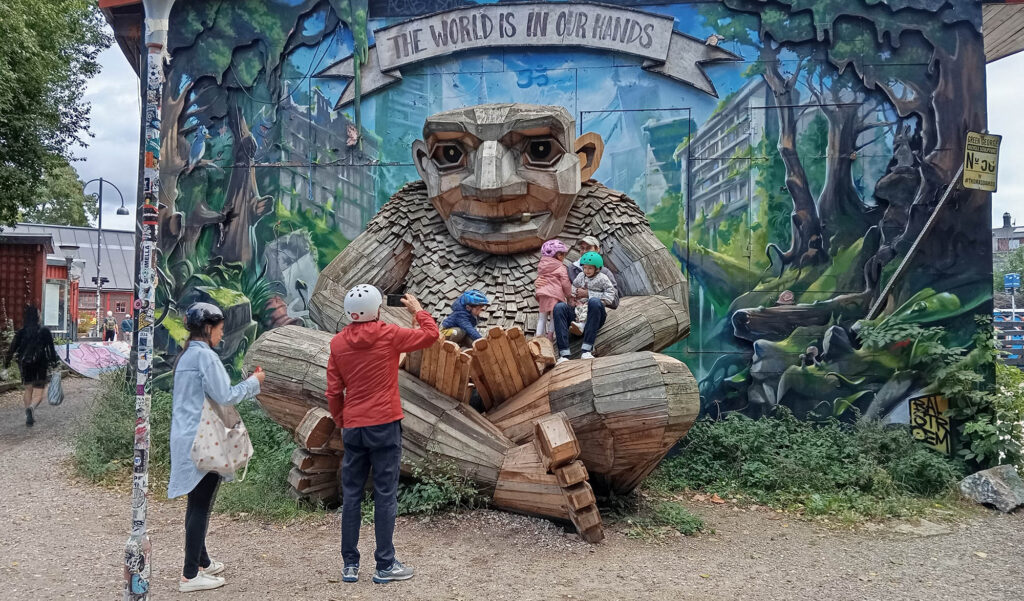
An important aspect of our culture is the disregard for irrational sentiments. As it doesn’t hurt you physically, and you can simply look away, we don’t give a shit about what you think of nudity, public drinking, etc.
If you think your children shouldn’t experience swearing, zoo dissections, or breastfeeding, don’t go to the Nordic countries.
You know many of our traditions, as we once colonised England, and the English, in turn, colonised the world, spreading components of our culture throughout the globe.
Without our ancestors you would be fasting for Christmas, you wouldn’t have the Jól tree (“Christmas tree”, as you might call it), elves and trolls would be unknown to you, and about 20% of the contemporary English language would be different words.
You are also familiar with some of our modern achievements, like the concept of national flags, the standardised shipping container, LEGO, IKEA and Bluetooth, all with one thing in common: As soon as they are introduced they seem so obvious.
Once you are here – in Iceland, Shetland, Orkney, the Faroe Islands, Denmark, Norway and Sweden – you will experience how seamless we adopt and adapt everything into our culture, and make it our own.
There’s even a Danish curry that you can’t find anywhere else in the world.

Today Nordic people – the modern day Vikings – look exactly like everybody else, in jeans and shirts, preoccupied with a smartphone, but with a puzzling combination of greater casualness and a more developed sense of style.
Once you get acquainted with us the inner workings of our culture will surface.
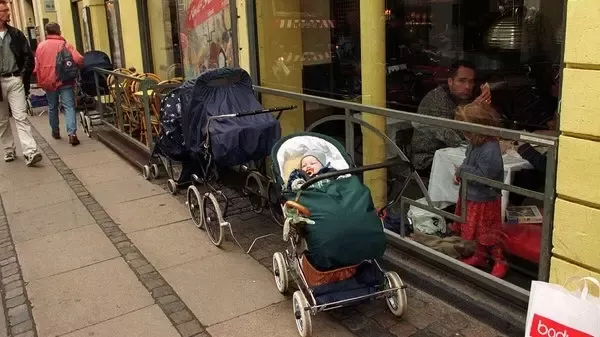
A simple introduction will turn any of us from completely unapproachable into a close friend, and you will start noticing weird behaviours, like a woman driving her boyfriend and children in a cargo bicycle, infants left unattended in prams outside restaurants, doors left unlocked, drunk teenage girls walking dark alleys alone on Friday night, the quiet of hornless, bell-less traffic…
It seems like fear, crime, misogyny, homophobia, disrespect and disapproval are completely unthinkable.
To some a paradise on earth, to others very inappropriate – or just plain weird.
Buckle up and get sharper – the boundaries of humour are wide open. While no topic is off-limits, poorly executed or uninformed jokes will fall flat and reflect poorly on your intellect.
We are open-minded, friendly and welcoming, but if you dislike our ethics or think our beer is too expensive, we will kindly but firmly remind you that you chose to come here, and you are free to leave.
If you want to make a good impression in the Nordic countries, avoid embarrassing yourself:
- Don’t blow your own horn. Be humble and self-deprecating.
Arrogance will send you to the back of the queue – or out of the queue altogether.
The best jokes are the ones where you make fun of yourself. - Don’t advertise your religious faith. Religion is widely regarded as mythology and superstition.
We mention “God” a lot. It’s always a joke. - Be respectful to everyone. The waiter and the person at the ticket counter is just as important as you are. You can reasonably assume that the person sweeping the sidewalk is better educated and makes more money than you do. Even if it’s not so, they still matter just as much as you.
- The right of way belongs first to pedestrians, then cyclists, and finally cars.
You can also think of this as a metaphor: the most vulnerable deserve the greatest respect. - Don’t use the car horn or bicycle bell to pass anyone. Wait. (Even this can be perceived as a metaphor.)
- Don’t be surprised if you see our prime minister or king on a bicycle in the city centre.
- Don’t tell us something is inappropriate. If you complain to the staff in a restaurant about someone tongue kissing or breastfeeding, you will politely be asked to leave and never come back.
- If you see someone skinny dipping, a peek is fine, but don’t make it weird by staring.
- If you see something that offends you, look away.
- Rules are a reminder to show consideration when you brake them.
There are two concepts you should familiarise yourself with, before visiting: Janteloven and Hygge.
Janteloven – ”the law of Jante” – is an unwritten law stating that everybody is equal, and you can’t rise above the group.
The paragraphs in the law states that you shouldn’t think you are better, smarter or more important than anybody else.
While there are many very rich people in the Nordic countries, you will not see many expensive cars. The Jante law means that driving a Ferrari you will not be perceived as successful but as a smug moron.
Take what you do very seriously, but don’t take yourself seriously.

Hygge is a difficult concept to explain, but can very often be translated into one of two words: “cozy” or “nice” – or a morph of these two words.
It’s a versatile word, used for greetings, wishes, and describing places or situations, and even appears in compounds like candles, food, and socks.
And you will hear it all the time: “Hygge”, “hyggeligt”, “hyg”. (In Swedish it’s “mys” and “mysigt”.)
It’s often associated with the special Nordic indoor experience, with candlelights, snacks and warm beverages, while dressed in something warm and soft.
In reality it’s used just as often about an outdoor summer experience, like a barbeque or a picnic.
In Sweden there’s even a word for coffe-cake-and-smalltalk: “Fika”.
Hygge is always at the back of our minds when we design a space: Pleasant colours, muffled sounds and soft warm lights, keeping in mind that it’s made for humans, not machines.
Fluorescent lights might be practical, along with steel tables and plastic plates, on a concrete floor. But it’s not going to happen.
What’s going to happen is wooden floors and furniture, beige walls, ceramic plates and candles.
What janteloven and hygge have in common – and what encapsulates Nordic culture very well – is unpretentious.
If you’ve ever seen a movie with vicious Vikings fiercely defending a fortress, remember that it’s just a movie. In reality, there were no fortifications in medieval Scandinavia. Oncoming enemies would be met in the fields, and every village – even every house – could be walked right through.
To this day the idea of open areas, available to the public, is a key part of city planning in the Nordic countries, and this – not the houses – was the reason why Copenhagen has been appointed the World Capital of Architecture.
This decision was made to make sure architects and city planners experience these “Edge Zones” on their own.
Abroad it’s also known as “Copenhagenization”, and where implemented it clearly works: Crime drops like a stone.
It’s true that open areas will attract five or six homeless people and drug addicts, but if it’s inviting and playful enough it will also attract 500-600 families, students, yoga enthusiasts, skaters, picnic’ers, dancers, swimmers and outdoor gymnasts – and there’s room for everyone.
In Denmark you can own a hundred million kroner beach mansion, with a huge private garden, right by the sea, but you can’t own the waterfront. The beach itself will always be public property.
In several of the Nordic countries, there’s a law called “Allemansrätten”. This means that any field or forest – private or public – is publicly accessible, provided that you show consideration.
You can walk through, pitch a tent and spend the night, free of charge.
In the Nordics, the sign “Trespassers will be shot” is unthinkable. Instead the message is “Trespassers will be offered morning coffee”.
No fear, no walls, no fences, no locks – after all we are still Vikings.